
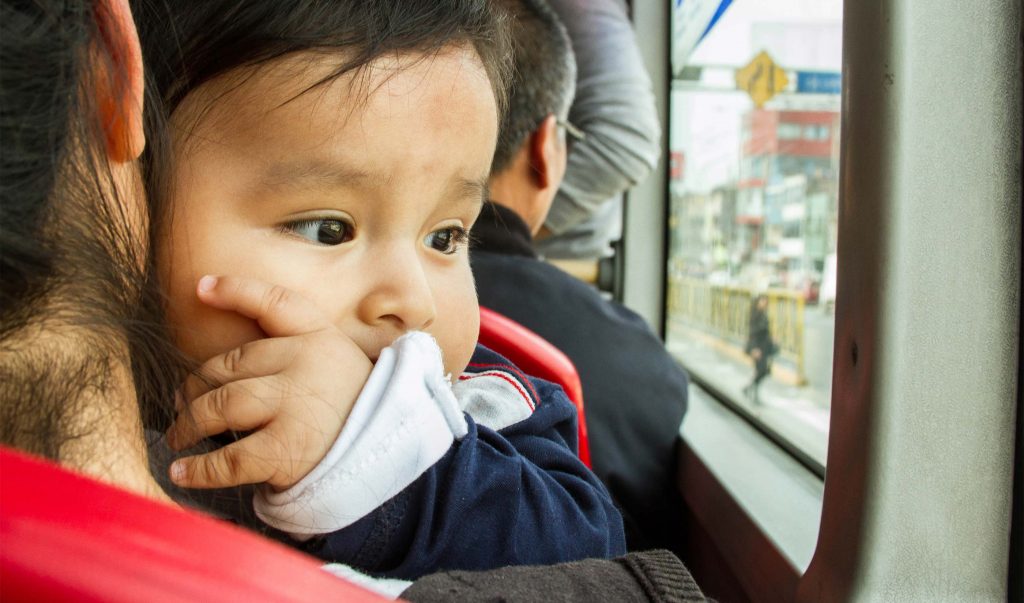
Urban transportation can affect the quality of the experiences that shape the developing brain – for good and for bad. It affects the extent to which pregnant women, babies and toddlers can access the services they need for healthy development: sources of healthy food, well baby clinics and other primary healthcare, childcare, parks, and play spaces. It can cause stress for caregivers. It affects the quality and amount of responsive care they can provide. It can pollute the air.
We encourage cities to prioritise the health of their youngest residents by considering the following:
1 15-minute (or less) neighbourhoods for babies
Shortening distances to key early childhood services is one of the best things a city can do for the healthy development of its babies and toddlers.
2 Plan for the types of journeys made by caregivers, especially women
Caregivers have different travel patterns from daily home-to-work commuters. Their journeys tend to involve many stops and often take place at off-peak Measures that accommodate the needs of caregivers travelling with small children could include: universal transit cards or time-based systems that allow passengers to transfer without needing to pay again; predictable schedules that make it easier to plan multi-leg journeys and reduce waiting times; and measures to make public transport and pavements safer from harassment and violence, as well as more accessible for pushchairs or people juggling packages and children.
3 Prioritise the routes and destinations most important to babies, toddlers and caregivers
It’s overwhelming to think of improving every street and pavement in a city.
4 Design child-friendly streets
For babies and toddlers, safer roads mean both traffic safety and reducing air pollution. As described in the next article, the Global Designing Cities Initiative is working on a ‘Streets for Kids’ supplement to its Global Street Design Guide (2016), which provides technical guidance on designing streets that serve both as safer transport corridors and spaces for vibrant public life.
5 Create walkable cities
Not only is walking good exercise and free – it is predictable, reducing stress on already stressed caregivers. And, at its best, walking through city streets creates a stream of interesting sights, sounds and people for small children to experience.
6 Make travel fun
City dwellers can spend hours a day in transit. One recent project to turn travel into moments for learning and love is in São Paulo, Brazil, where billboard messages have been posted to encourage caregivers to talk, sing, and play with their small children.
7 Regulate cars in places where small children spend the most time
Cities around the world are banning cars in city centres. We’d like to see this near places where babies and toddlers spend the most time, such as play streets near schools and in neighbourhoods filled with families.
References can be found in the PDF version of the article.