
Designing cities for young children has huge benefits, from healthier environments to more inclusive spaces. Parents and other caregivers also gain from this kind of urban development. We know how stressful cities can be to navigate when you’re carrying a baby, pushing a stroller, or holding the hand of a little human who is tired and irritable – or who just wants to play and explore. That’s why we’re spotlighting simple things urban designers can do to change that experience for caregivers and their little ones.
Launched in 2020, the Nurturing Neighbourhoods Challenge [1] has helped cities across India transform over 180 urban spaces for this population. As part of the World Resources Institute (WRI) India team providing technical support to many of these projects, we present five design choices that we have seen make a real difference.
The Nurturing Neighbourhoods Challenge is an initiative by the Smart Cities Mission of India’s Ministry of Housing and Urban Affairs with support from the Van Leer Foundation and technical assistance from WRI India.
1. Play opportunities on the doorstep
Kochi, Kerala
It is a great relief for parents when their children can play close to home. Taking children to play in a park can be a challenge, as it often requires time and effort to travel to such spaces. However, when a mini park is located close by it becomes much more practical.
In Kochi, a city in south-west India, city agencies – Cochin Smart Mission Limited and Kochi Municipal Corporation – helped make this a reality. Following discussions with residents of a densely populated neighbourhood, authorities reclaimed a stretch of Poovath Street that had previously been used for parking vehicles and transformed it into a linear “pocket park”. The design featured murals painted by community members, play options – such as sandpits – suitable for various ages, exercise equipment for adults, and rest areas.
Follow-up surveys show that 60% of local caregivers and children now use the area for more than 30 minutes a day. In the mornings and evenings, female caregivers – from young girls to elderly women – can be seen using this outdoor space while keeping an eye on children; some watch over them from home while they manage household tasks or socialise with friends. Members of the community have stepped up to maintain the space, ensuring that it feels secure.
As one father said:

2. Play spaces outside children’s health centres
Kohima, Nagaland
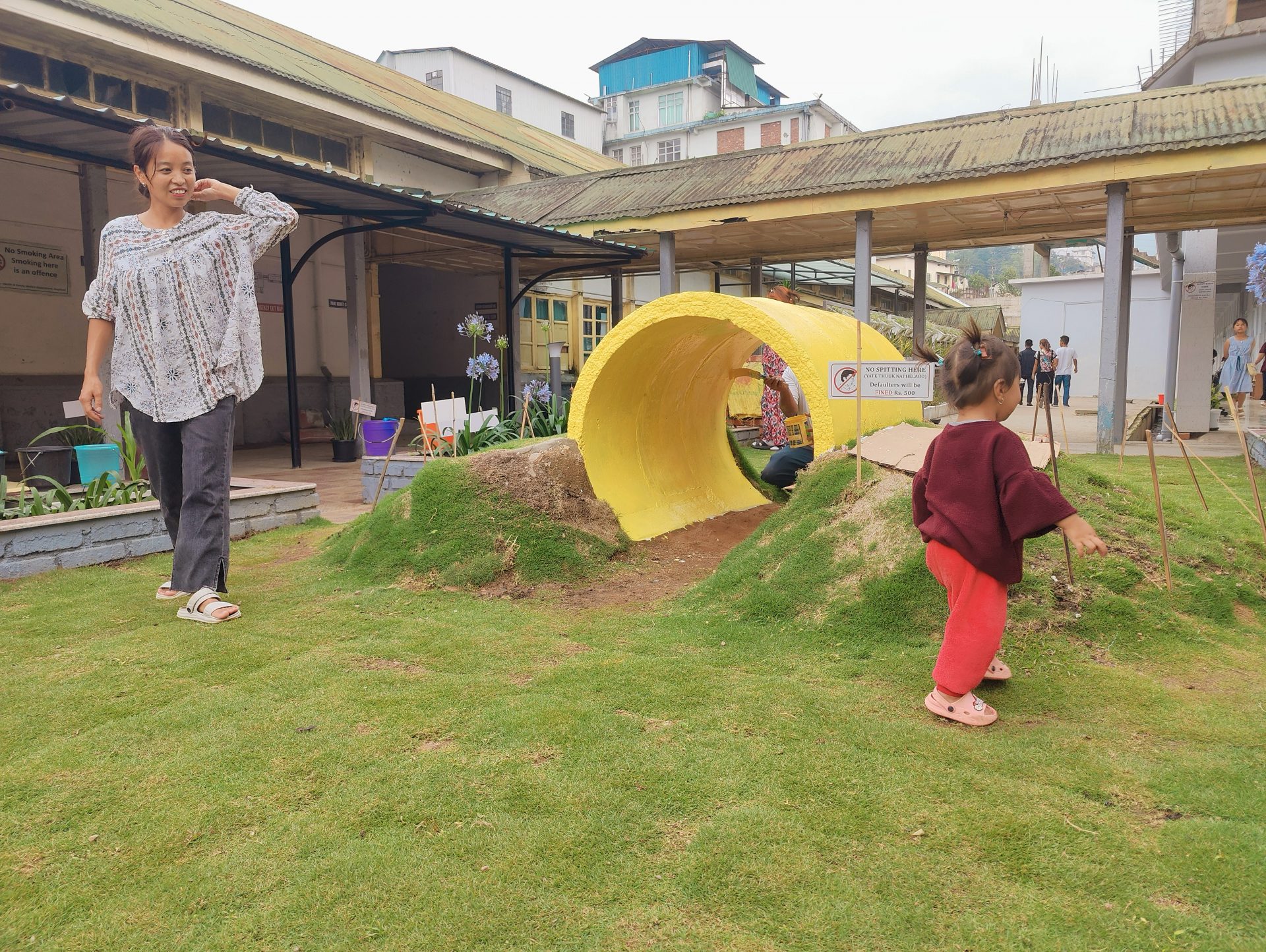
When parents and caregivers take their young children for health check-ups, they often have to wait to be seen. When there is no place for them to keep their children entertained, waiting can become a stressful experience.
The Naga Hospital in Kohima, in north-east India, had a courtyard next to the paediatric ward, but it was not suitable for young children to play, and could not be easily accessed by caregivers with wheelchairs or strollers due to the uneven surface of the walkways. The courtyard was transformed with the needs of these visitors in mind: walkways were levelled, places to sit in the shade were provided, and play elements were incorporated to engage children of various ages.
Dr Prathana Das, a paediatrician at the Naga Hospital, says:
This simple intervention has transformed a stressful waiting experience into a place of smiles and giggles.
3. Caregiver-friendly amenities at maternity hospitals
Wilson Garden, Bangalore
The comfort and specific needs of parents and other caregivers are often overlooked in the design of maternity hospitals.
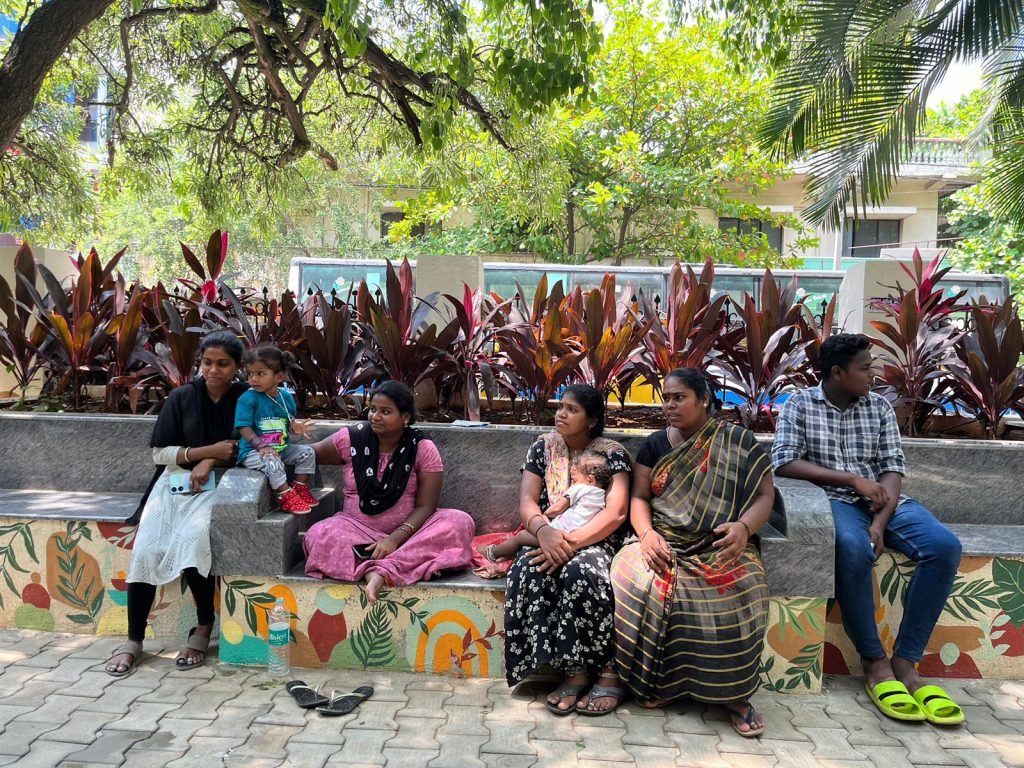
For pregnant women, mothers and young children visiting BBMP (Bruhat Bengaluru Mahanagara Palike) maternity hospital at Wilson Garden in Bangalore, there was no adequate seating; families, including the woman in labour herself, had to stand or sit on the kerbs while waiting for hours. An extensive study was conducted to understand the needs of these women who came to the hospital. In response, wide and multi-height seating modules with backrests were provided to ensure comfort, particularly for pregnant women.
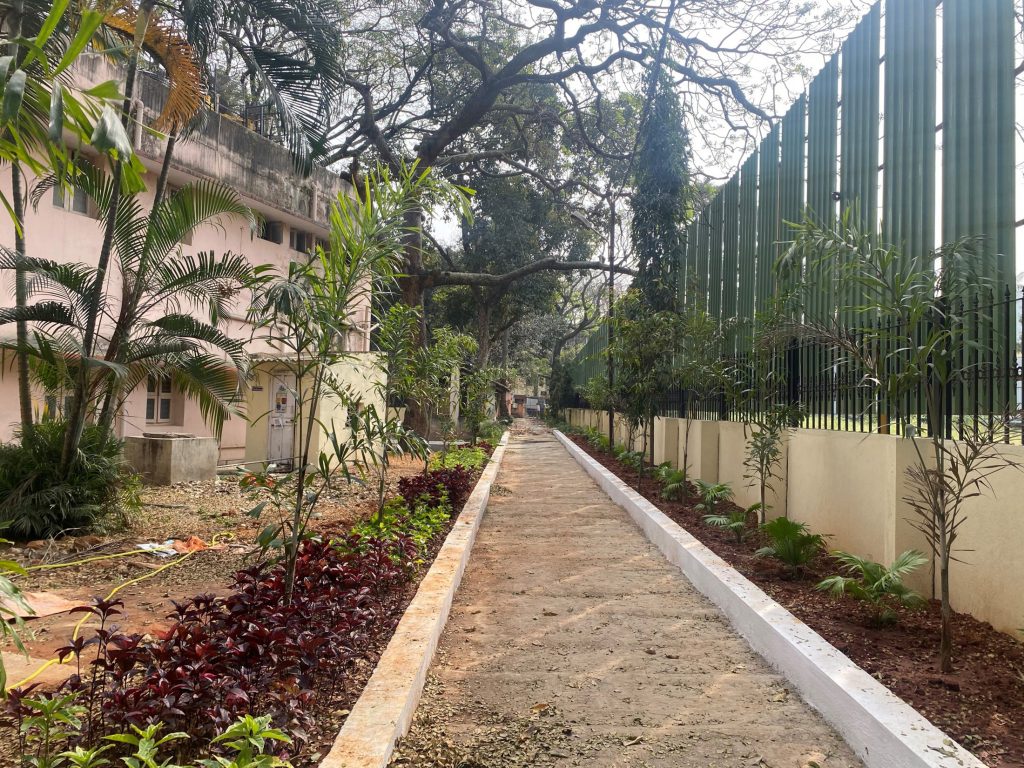
A play area with elements designed for children of various ages was developed adjacent to the waiting area to occupy children and keep them calm while waiting. Additionally, a peaceful herb garden with a walking trail was introduced, offering a calming environment with its medicinal and aromatic plants, and providing a space for relaxation. This encouraged light physical activity, offering pregnant women and other visitors a quiet outdoor space for short walks or gentle exercise. To ensure convenience and hygiene, e-toilets with self-cleaning, touchless systems were installed near the waiting area. These thoughtful improvements collectively created a more supportive, patient- centred environment, significantly enhancing the overall hospital experience for families.
A medical officer at BBMP Maternity Hospital said:

4. Clustering services to create a care hub
Rourkela, Odisha
Caregivers can spend a lot of time travelling around a city, just getting from one place to another. It might take a whole day to attend a routine health appointment, go to a play group and visit the temple if they are spread across the city. The stress of travel can be reduced if all the places a caregiver wants to visit with their child are located in the same local area.
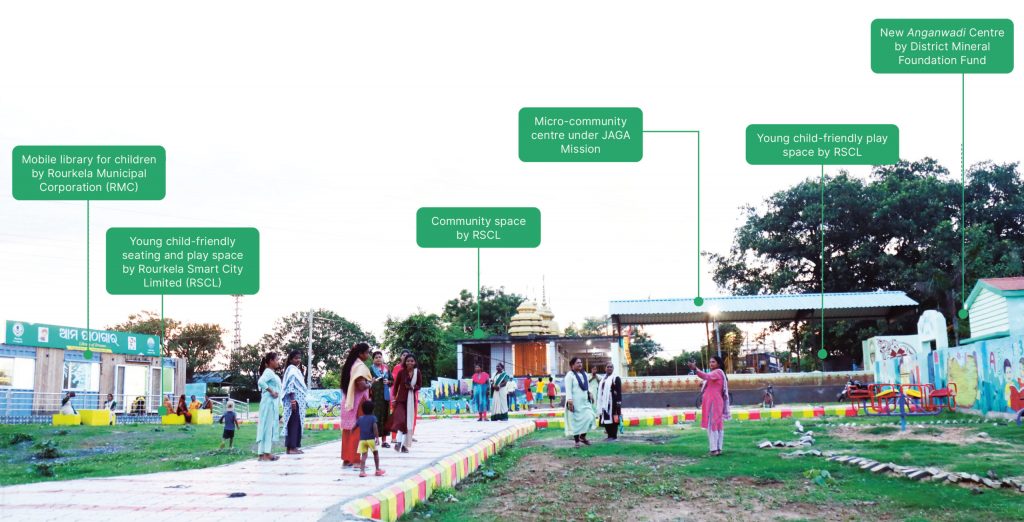
In the Ruputola neighbourhood of Rourkela, city agencies – the municipal corporation and Smart City SPV – leveraged funding from various state-level programmes to develop a cohesive care hub that includes an anganwadi (an early childhood development centre that provides education, healthcare, nutrition and support for caregivers and children under 6), community centre, library, temple, women’s activity centre and play area. Not only has this simplified the logistics of daily travel for caregivers, it has fostered a vibrant community space where caregivers can connect with each other and with community members, supporting their overall wellbeing as well as the development of their children. On average, 30 caregivers with their young children are now seen interacting with each other and utilising the facility every day.
A member of the Slum Dwellers Association says:
5. Engaging caregivers in a co-creation process
Indore, Madhya Pradesh
By involving caregivers in urban design processes, we have witnessed a significant increase in the use and maintenance of spaces. While the needs and concerns of caregivers are often similar from one city to another, specific neighbourhoods can have unique circumstances. The involvement of caregivers in the co-creation process is essential to creating environments that truly meet their challenges, and fosters a sense of ownership.
In the Sanskriti Nagar neighbourhood of Indore, focus group discussions revealed that caregivers would have liked to use the park next to the local anganwadi outside the centre’s operating hours, but they were unable to do so because various antisocial behaviours made it unsafe. In response, city leaders organised community activities to reclaim the space, while making improvements such as creating shaded areas and interactive play features using natural materials. The area has now become a vibrant community hub, where women feel safe and children and caregivers enjoy spending time together. Of the female caregivers interviewed, 82% reported feeling safer when using the space and taking part in activities.
As the grandfather of one toddler in the neighbourhood says: